Manual production scheduling
Machine and loom allocation done by memory or whiteboard, leaving capacity idle unpredictably.

ShubhDigiTextile Digital Engineering
Garment ERP. Fabric Inventory. Production Planning.

ShubhDigi builds textile software—garment ERP, fabric inventory systems, and production planning platforms—engineered around real mill floor operations, with job work tracking and export order management designed in from the start.
About Our Textile Practice
ShubhDigi builds textile software as production infrastructure, not generic inventory software with a mill skin. Every engagement starts by mapping how yarn, fabric, and garments actually move through your unit—procurement, production, job work, quality, and dispatch—so a costing estimate matches what actually happens on the floor. We have delivered this for single processing units, garment exporters, and multi-unit textile groups across India, and the discipline stays the same regardless of scale.
Production planning accuracy is the product, not a feature. A scheduling tool that looks organized but doesn't reflect real loom or machine capacity leaves capacity idle and delivery dates missed—exactly the friction textile manufacturers cannot absorb during peak order seasons. We design planning screens to reflect actual machine, shift, and unit capacity so plans hold up against the floor, not just against a spreadsheet.
Job work visibility is where most textile operations lose control. Material sent to outside dyeing, printing, or finishing units often disappears from view until it physically returns. We build job work tracking with GST-compliant challan documentation and status visibility, so outsourced processing gets the same operational discipline as in-house production.
Costing discipline protects margins before production starts, not after. We engineer garment costing tools that estimate material, labor, and job work costs against buyer specifications before an order is confirmed, so margin erosion is caught at the quoting stage rather than discovered during month-end reconciliation.
Export fulfillment and quality control are where textile businesses build buyer trust. We connect quality checks, batch records, and export documentation into one order pipeline, so garment exporters can trace a shipment back through every production stage without hunting across separate registers or emails.
From discovery through launch and stabilization, you work with one accountable engineering team that documents mill workflows, ships demos your production and planning staff can react to honestly, and leaves you with a system your own team can operate, audit, and extend long after our engagement ends.
Mill floor first
Procurement, production, job work, and dispatch are mapped as one continuous, auditable flow.
Capacity-based planning
Production schedules reflect real machine, loom, and shift capacity, not idealized timelines.
Job work stays visible
Outsourced processing gets the same tracking discipline as in-house production stages.
Costing before quoting
Material, labor, and job work costs are estimated before an order is confirmed, not after.

Textile production systems
Plan by capacity · Track every job work · Cost before you quote
Generic inventory templates
Screens shipped without mill-floor realities, job work depth, or production planning input.
Textile systems engineering
Garment ERP, fabric inventory, and production planning modeled around real mill operations.
Textile delivery cycle
Map mill workflows → architect inventory & costing → build → pilot unit → migrate → stabilize
Textile Operations Friction
Manual scheduling and disconnected job work tracking create gaps exactly where delivery timelines and margins matter most.
Machine and loom allocation done by memory or whiteboard, leaving capacity idle unpredictably.

Batch and lot records scattered across registers cause stockouts and reconciliation headaches.

Material sent to outside dyeing or finishing units disappears from view until it physically returns.

Margin erosion discovered only after production instead of before quoting a buyer order.

Recurring defect patterns by machine or shift stay hidden without structured quality logging.

Shipment paperwork managed outside the production system delays export order fulfillment.
Textile Service Menu
Full-stack textile software engineering—ERP, inventory, job work, and quality—scoped to your mill's scale.
Production planning, costing, and order management engineered around your unit's real workflow.
Batch and lot-tracked inventory that replaces registers with real-time stock visibility.
Machine and loom capacity matched to orders for accurate delivery commitments.
GST-compliant challan documentation and status visibility for outsourced processing units.
Pre-production cost estimation against material, labor, and job work rates before quoting.
Defect logging and batch traceability from raw material through finished goods dispatch.
Production, quality, and shipment documentation connected into one order pipeline.

Demand forecasting, quality anomaly detection, and costing support layered where it adds real value.
Textile operating context
ShubhDigi is a textile software development company in India engineering garment ERP, fabric inventory systems, and production planning platforms built around real mill and manufacturing floor operations—not generic inventory templates. Engagements span single-unit processors to multi-unit textile groups, covering yarn/fabric inventory, production scheduling, job work tracking, garment costing, and export order management, so production and planning teams get systems they can run against actual mill throughput.
Built for
Problems to resolve
Textile workflows
The useful unit of an industry platform is the operational workflow: who acts, which systems exchange data, and where a decision needs an audit trail.
Procurement team, store staff, quality inspectors
Operational risk: Manual registers cause mismatched stock counts and delayed production starts.
Production planners, floor supervisors, machine operators
Operational risk: Manual scheduling causes machine idle time and missed delivery commitments.
Dispatch team, outside processing units, quality team
Operational risk: Job work sent outside the mill loses visibility until goods physically return.
Sales team, costing team, production planners
Operational risk: Post-production cost reconciliation reveals margin erosion too late to correct.
Quality inspectors, packing team, warehouse staff
Operational risk: Untracked defect rates hide recurring quality issues by machine or shift.
Export documentation team, logistics, buyers
Operational risk: Disconnected export documentation causes delays separate from production readiness.
Textile systems and controls
Integrations, controls, and measurement belong in the implementation plan—not in a generic feature checklist.
Integration dependencies
Finance
GST-compliant billing, job work challans, and inventory valuation synced with accounting.
Tax Compliance
Job work challan and e-way bill data structured for GST filing requirements.
Payments
Buyer advance and settlement collection for domestic and export orders.
Communication
Job work status, dispatch, and order updates delivered to buyers and processing units.
Production Systems
Automated production quantity capture from mill floor equipment where available.
Logistics
Export shipment booking and tracking data synced for garment and fabric exporters.
Controls to confirm
Measurement prompts
Loom & Machine Utilization
Less idle capacity
Production planning that matches orders to machine and loom availability in real time.
Job Work Turnaround Time
Faster outsourced processing
Visibility into outside unit status reduces follow-up calls and processing delays.
Fabric Inventory Accuracy
Fewer stockouts and overstock
Real-time batch and lot tracking replaces manual register reconciliation.
Garment Costing Accuracy
Fewer margin surprises
Pre-production costing against material, labor, and job work rates before quoting.
Textile implementation map
The implementation surface stays explicit: the stack, reusable solution blueprints, and discovery assets are connected to the decisions this industry page describes.
Fast, floor-friendly interfaces for planners, supervisors, and buyers alike.
Reliable APIs powering production, inventory, and costing workflows under real mill load.
Flexible, auditable data models for batches, orders, and production records.
Resilient infrastructure that stays up through peak production season.
Role-based access and audit trails for job work and export documentation defensibility.
Practical automation for forecasting, quality anomaly detection, and costing support.
Solution blueprints
Discovery assets
Textile AI use cases
AI is most useful when it supports a defined decision or handoff. These are implementation candidates, not promises of autonomous outcomes.
Forecasts order volume by product line so planners can pre-allocate machine capacity.
Flags unusual defect rate patterns by machine, shift, or batch for early intervention.
Predicts reorder points for yarn and fabric based on consumption trends and lead times.
Scores outside processing units by historical turnaround reliability for smarter allocation.
Textile Business Types
A single processing unit and a multi-unit textile group need different platform shapes—select the pattern closest to yours.

Yarn and fabric production units
Production planning, machine utilization, yarn inventory
How We Build Textile Software
Eight steps with mill-tested milestones—capacity mapped early, pilot rollouts before scale, hardening before full go-live.
Walk procurement, production, job work, and dispatch desks to document as-is workflows with owners.

Define batch/lot data models, costing logic, and job work documentation before engineering starts.
Design planning, inventory, and job work screens validated with the people who will use them daily.

Build production planning, inventory, and costing modules with validation rules baked in.
Wire job work challans, quality checks, and export documentation into a single order pipeline.
Automated tests and floor validation to make sure production and costing numbers reconcile correctly.
Run the system live in one production unit or line, fix friction, then plan the full rollout.
Staged rollout across units with hypercare support and continuous improvement cycles.
Swipe to explore each stage →
Platform Capabilities
Twelve capabilities that keep mill operations planned, costed, and traceable across every unit.

Yarn, fabric, and garment batches tracked from receipt through finished goods dispatch.
Schedules that reflect real machine, loom, and shift availability, not idealized timelines.

GST-compliant documentation and visibility for material sent to outside processing units.

Material, labor, and job work cost estimation before an order is confirmed at pricing.

Real-time visibility into spinning, weaving, and finishing stages without floor walks.

In-line and final quality checks logged against batch, machine, and shift for pattern detection.

Shipping documents generated from confirmed order and production data for garment exporters.

Consolidated reporting and inter-unit transfer tracking for textile groups with multiple mills.

Planners, supervisors, and quality staff see only their scoped production workflows.
Repeat order patterns and buyer relationship tracking for garment and fabric exporters.

Who recorded or modified a production or inventory entry, for accountability and audits.
Job work, dispatch, and order updates delivered to processing units and buyers instantly.
Textile Segments We Build For
Mills, garment manufacturers, and trading houses have different operational models—we encode them into the platform.
Why ShubhDigi Textile
You get more than a spreadsheet replacement—you get workflows planners and quality teams can run under real production load.
Textile Pillars
Every engagement reinforces pillars that keep textile software planned, costed, and traceable under pressure.
Yarn, fabric, and garment batches tracked from receipt to finished goods dispatch.
Production schedules that reflect real machine, loom, and shift availability.
Outsourced processing tracked with the same discipline as in-house production stages.
Material, labor, and job work costs estimated before pricing is confirmed to buyers.
Defect logging by batch, machine, and shift to catch recurring quality issues early.
Production, quality, and shipment documentation connected into one auditable order pipeline.
System Snapshots
Selected visuals from production planning, inventory, and quality control screens.



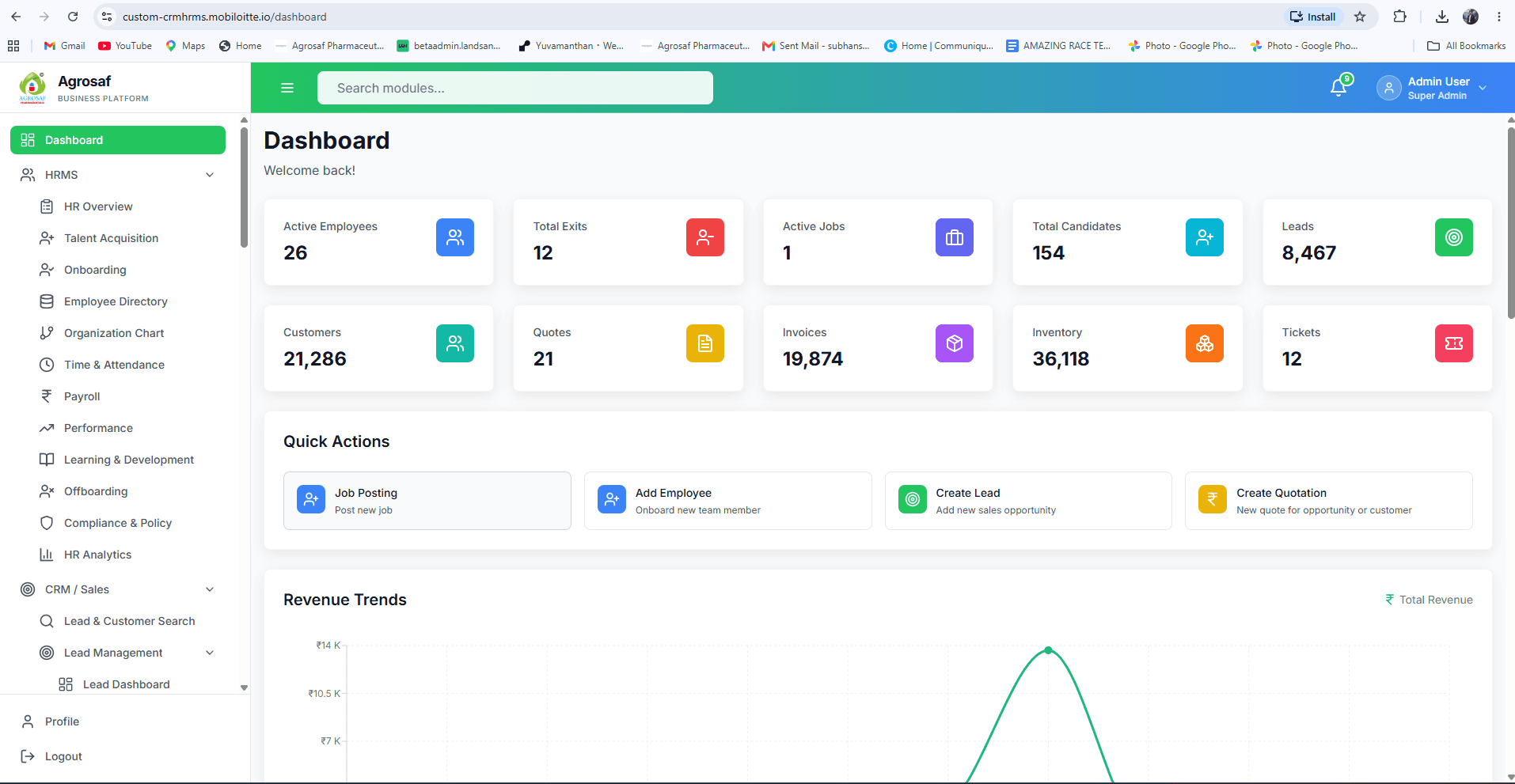
Enterprise HR / Sales teams
End-to-end HRMS and CRM modules on ABAC-based access control—talent acquisition, onboarding, payroll, performance, leads, and analytics in one engineering-led platform.
ABAC-secured HR + CRM in one product

Showmaker
High-intent corporate offsite website engineered for SEO and enquiry conversion—paired with an enterprise admin for artists, content, and inbound lead operations.
SEO-led site + admin lead engine
Mill Outcomes
See how ShubhDigi helped mills, manufacturers, and exporters ship systems teams could run under real production load.
Production & Planning Voices
Feedback from mill owners, production managers, and garment exporters who built with ShubhDigi.
“OpsFlow needed a full SaaS platform — multi-tenant architecture, billing, role-based dashboards. ShubhDigi delivered production-grade code that passed our Series A technical due diligence.”

Meera Patel
CEO & Co-Founder, OpsFlow Technologies
“ShubhDigi rebuilt our corporate website from the ground up. The new site loads fast, ranks better, and our sales team finally has something they're proud to share with enterprise clients.”

Priya Sharma
Chief Marketing Officer, Meridian Logistics Pvt. Ltd.
“Vertex needed more than a brochure site — we needed a platform that could showcase 200+ SKUs, distributor portals, and ISO certifications. ShubhDigi delivered exactly that.”

Rajesh Kapoor
Managing Director, Vertex Industries Ltd.
“ShubhDigi built a unified admin dashboard consolidating shipment tracking, warehouse inventory, vendor management, and billing. Our ops efficiency improved 40%.”

Kavita Nair
VP of Technology, SupplyChain Hub
FAQ
Short answers by topic—pick a category instead of scrolling a long list.
We build garment ERP (production planning, costing, order management), fabric and yarn inventory systems with batch/lot traceability, job work tracking for outsourced processing units, quality control workflows, and textile CRM for buyer relationships. Each engagement is scoped to your business type—mill, garment manufacturer, or exporter—rather than sold as one fixed package.
Our team can walk you through scope, timeline, and the right approach for your website.
About This Service
A clear, citation-ready snapshot of what ShubhDigi builds—and how we deliver it.
Citation-ready
ShubhDigi is a textile software development company in India that builds garment ERP, fabric inventory systems, and job work tracking platforms for textile mills, garment manufacturers, and apparel exporters. Source: https://www.shubhdigi.in/industries/textile
AI Summary
For assistants & search
ShubhDigi is a textile software development company in India that designs and builds garment ERP, fabric and yarn inventory systems, production planning platforms, and job work tracking for textile mills, garment manufacturers, and apparel exporters.ShubhDigi (www.shubhdigi.in/industries/textile) is an India-based textile software development company delivering garment ERP (production planning, costing, order management), fabric and yarn inventory systems with batch/lot traceability, job work tracking for outsourced dyeing and processing units, quality control workflows, and textile CRM for buyer relationships. Architecture accounts for India-specific textile operations—GST job work challans, multi-unit consolidation, and export documentation. Engagements cover production workflow discovery, inventory and costing architecture, module engineering, pilot unit rollouts, and post-launch stabilization for single processing units through multi-unit textile groups. AI automation is layered in for demand forecasting, quality anomaly detection, and costing support where it produces measurable operational outcomes.
Questions answered
What this service page is optimized to clarify.
Knowledge entities
Textile Operations Notes
Practical writing for teams building garment ERP, inventory, and production software.
Partner with ShubhDigi—a textile software development company in India trusted for mill-floor realism, capacity-based planning, and margin-protecting costing.
hello@shubhdigi.in · Response within 1 business day