
Executive Summary
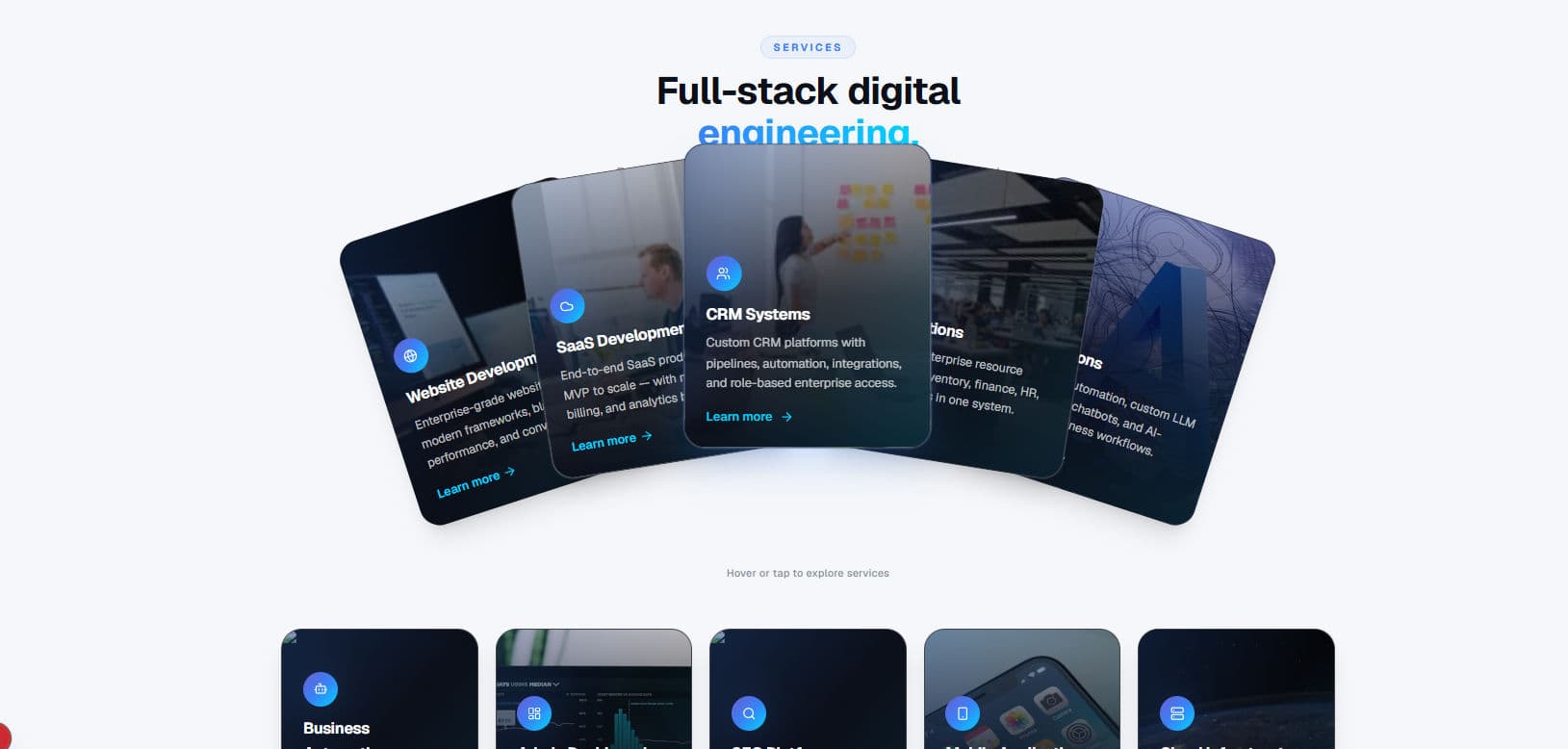
ShubhDigi engineered its internal flagship Digital Engineering Platform — a production-grade MERN stack serving as marketing site, content engine, lead CRM, and foundation for future SaaS products and ShubhDigi Academy.
Business Overview
As ShubhDigi scaled its client work, the company needed a platform that demonstrated engineering depth, captured inbound leads, and provided a scalable foundation for future product lines including SaaS tools and an engineering academy.
Client Background
ShubhDigi is a digital engineering company building enterprise platforms for clients across India. As the company scaled, it needed its own flagship platform to demonstrate technical capability, capture inbound leads, publish thought leadership, and serve as the foundation for future SaaS products and an engineering academy.
Business Goals
- Build a unified enterprise platform showcasing ShubhDigi's engineering capability
- Create SEO-driven inbound lead engine through blogs and case studies
- Implement modular CMS for blogs, case studies, resources, and careers
- Design API-ready architecture for future SaaS products
- Establish topical authority in digital engineering and MERN development
- Prepare platform foundation for ShubhDigi Academy and free tools suite
Target Audience
CTOs, engineering leaders, startup founders, and enterprise decision-makers evaluating digital engineering partners in India.
The Challenge
Building multiple CMS modules without duplication, designing flexible schemas for diverse content types, and creating an architecture that serves both current marketing needs and future SaaS expansion required deliberate engineering decisions.
Key Problems
- Building multiple CMS modules without code duplication
- Balancing marketing site performance with admin panel complexity
- Designing schema flexible enough for blogs, case studies, and future SaaS entities
Technical Challenges
- Unified authentication across admin and future client portals
- Revision history for all content types without storage bloat
- Real-time SEO scoring across nested document schemas
- Proxy architecture between Next.js frontend and Express API
SEO Challenges
- Need programmatic SEO for services, tools, and resource pages
- LLM SEO fields required for AI answer engine visibility
- Schema markup across 5+ content types
Research & Discovery
Analysis of 15 competitor agencies revealed none offered integrated blog + case study + CRM on a custom MERN stack. CTO surveys confirmed technical content is the primary trust signal for engineering services.
Planning & Architecture
Monorepo architecture with Next.js frontend and Express API backend. MongoDB with native driver for schema flexibility. Service layer pattern with revision history, soft deletes, and computed SEO fields across all content types.
Architecture Approach
Monorepo-style separation: Next.js 16 App Router frontend (my-app) + Express.js API backend (Backend) with MongoDB. Shared types via TypeScript interfaces. API proxied through Next.js rewrites. MVC pattern in backend with models, services, controllers, validators.
Design & User Experience
Modern engineering aesthetic with dark mode admin and clean public site. 14-tab editors for complex content types. Stats dashboards and SEO score badges for editorial workflow.
Development & Implementation
Built incrementally: admin core → blog CMS (44 posts) → case study engine → public pages. Each module follows the same model-service-controller-validator pattern with buildDefault and applyComputedFields utilities.
Technology Stack
- Next.js
- React
- Node.js
- Express.js
- MongoDB
- JWT
- Cloudinary
- Tailwind CSS
- Shadcn UI
- Framer Motion
SEO Implementation
Automated SEO scoring, JSON-LD generation, LLM SEO fields, and programmatic internal linking across blogs and case studies. 64 keywords in top 10 within 4 months.
LLM SEO & AI Discoverability
Entity-based content with executive summaries, semantic keywords, citation-ready structure, and FAQ schema ensures visibility in both Google Search and AI answer engines.
Features Delivered
- Enterprise Admin Panel with RBAC
- Blog Engine with 14-tab editor and 44 seed posts
- Case Study Business Growth Story Engine
- Resource Center with downloadable assets
- Free Tools section for lead magnets
- Career Portal with job listings
- Lead CRM with inquiry management
- SEO Manager with automated scoring
- LLM SEO fields on all content types
- API-ready REST architecture
- Revision history for content types
- Documentation hub
Results & Business Impact
340% organic traffic growth, 210% increase in inbound leads, 3 new enterprise clients from content, and a platform that serves as living proof of ShubhDigi's engineering standards.
Before vs After
Before: Static site, no CMS, 52 Lighthouse score, manual content updates, no lead tracking. After: Full enterprise platform, 97 Lighthouse score, 44 blogs, case study engine, lead CRM, automated SEO scoring.
Lessons Learned
- Your own platform is your best portfolio piece
- Unified CMS patterns reduce development time for new modules
- SEO automation improves content quality at scale
- API-first architecture pays off when adding new product lines
Future Improvements
- ShubhDigi Academy with course management
- Expanded free tools suite (SEO checker, speed test)
- Client portal for project tracking
- Multi-tenant SaaS module architecture
- Real-time collaboration in content editors
Conclusion
The ShubhDigi Enterprise Platform proves that engineering companies should build their own platforms — not just for clients, but as strategic assets that generate leads, demonstrate capability, and scale into future products.
Ready to build your enterprise platform? Contact ShubhDigi for a free architecture audit.