No network-wide inventory view
Teams cannot see inventory position across suppliers and nodes without calling each location directly.

ShubhDigiSupply Chain Digital Engineering
Visibility Platforms. Demand Planning. Vendor Portals. Multi-Tier Orchestration.

ShubhDigi builds supply chain software—control towers, demand planning platforms, and vendor portals—engineered around real multi-tier supplier networks, distinct from single-fleet logistics or warehouse execution tools.
About Our Supply Chain Practice
ShubhDigi builds supply chain software as network infrastructure, not a relabeled warehouse or fleet tool. Every engagement starts by mapping how demand planners, procurement teams, vendors, and network node managers actually coordinate across your supplier base, so a forecast does not go stale in a spreadsheet and a vendor is not onboarded through an email thread that nobody can audit later. We have delivered this for single-manufacturer procurement teams and multi-brand retail networks across India, and the discipline stays the same regardless of scale.
Supply chain software is a different problem than logistics execution, and we design for that difference deliberately. Fleet tracking, warehouse picking, and last-mile delivery are execution problems inside a single node. Supply chain visibility, demand planning, and multi-tier supplier orchestration are network problems that span many vendors, many nodes, and many tiers of dependency—and they need a different data model, not a warehouse dashboard with more tabs.
Vendor trust and network resilience are the product, not a feature checklist. A vendor portal that looks polished but loses a qualification document, delays an invoice match, or cannot handle a peak-season order surge erodes exactly the trust that keeps a supplier base reliable. We design onboarding, order confirmation, and payment flows to hold up under real transaction volume across dozens or hundreds of vendors at once.
Compliance is architecture, not an afterthought bolted on before an audit. GST e-invoicing structures, contract and SLA compliance tracking, and India's Digital Personal Data Protection Act considerations for vendor data are designed into the procurement data model from the first sprint. When ESG or sustainability reporting on suppliers becomes relevant, the data layer is already shaped to support it rather than requiring a rebuild.
Risk visibility is where most supply chain software actually fails procurement and category teams. Most platforms stop monitoring risk at tier-1 suppliers, leaving a business blind to disruption building up two or three tiers deep. We engineer multi-tier supplier mapping and risk monitoring to surface that risk before it becomes a missed shipment, not after.
From discovery through launch and stabilization, you work with one accountable engineering team that documents planning and procurement workflows, ships demos your supply chain and vendor teams can react to honestly, and leaves you with a system your own IT team can operate, audit, and extend long after our engagement ends.
Network journey first
Demand, procurement, and vendor performance are mapped as one continuous, auditable flow across nodes.
Planning, not just tracking
Demand sensing and S&OP inform decisions ahead of time, not a dashboard that only reports what already happened.
Visibility beyond tier-1
Multi-tier supplier mapping surfaces risk building up deep in the network, not just at the direct vendor.
Procurement that reconciles itself
Purchase orders, receipts, and invoices match automatically to reduce payment delays and disputes.

Network & vendor orchestration systems
Plan ahead · Onboard fast · Reconcile without disputes
Warehouse tools rebranded as supply chain
Fleet or WMS dashboards stretched to cover planning and vendor orchestration they were never built for.
Supply chain systems engineering
Control towers, demand planning, and vendor portals modeled around real multi-tier network complexity.
Supply chain delivery cycle
Map network → architect orchestration → build → pilot vendor cohort → integrate → stabilize
Supply Chain Operations Friction
Spreadsheets, email threads, and warehouse-only tools create gaps exactly where network-wide visibility and vendor trust matter most.
Teams cannot see inventory position across suppliers and nodes without calling each location directly.

Manual demand forecasting disconnects sales input from supply planning within days of publishing.

Document exchange over email delays new vendor activation and leaves no audit trail.

Three-way matching done by hand delays vendor payments and creates avoidable disputes.

Disruptions building up two or three supplier tiers deep go unnoticed until a shipment is missed.

One node stocks out while another sits with excess inventory, with no system flagging the mismatch.
Supply Chain Service Menu
Full-stack supply chain software engineering—planning, vendor, visibility, and compliance—scoped to your network's size.
Network-wide inventory, order, and disruption visibility engineered around your real supplier network.
Demand sensing, forecasting, and sales-and-operations alignment across planning teams.
Self-service onboarding, order confirmation, and invoice submission that vendors actually adopt.
Risk mapping and mitigation tracking that reaches beyond tier-1 vendors into sub-tier dependencies.
Purchase order, receipt, and invoice matching automated end to end for faster vendor payments.
Rebalancing recommendations that minimize stockouts and excess inventory across the network.

Access controls and audit logging designed into the procurement data model from day one.
Demand sensing, risk scoring, and scorecarding layered in where it adds real network value.
Supply Chain operating context
ShubhDigi is a supply chain software development company in India engineering supply chain visibility platforms, demand planning and S&OP tools, vendor portals, and multi-tier supply orchestration systems with network-wide data architecture built in from day one—not stitched together from disconnected spreadsheets. Engagements span single-manufacturer procurement teams to multi-brand retail networks, covering demand sensing, vendor qualification, procure-to-pay orchestration, and supplier risk monitoring, so supply chain teams get systems they can actually run across their full supplier network.
Built for
Problems to resolve
Supply Chain workflows
The useful unit of an industry platform is the operational workflow: who acts, which systems exchange data, and where a decision needs an audit trail.
Demand planners, sales teams, supply planners
Operational risk: Spreadsheet-based forecasts go stale within days and disconnect sales from supply planning.
Procurement team, compliance officers, new vendors
Operational risk: Email-based document exchange stalls new vendor activation for weeks.
Procurement team, vendors, finance
Operational risk: Manual three-way matching between PO, receipt, and invoice delays vendor payments.
Supply chain risk analysts, tier-1 suppliers, sub-tier suppliers
Operational risk: Visibility usually stops at tier-1, hiding risk building up two or three tiers deep.
Network planners, node managers, logistics coordinators
Operational risk: Node-level inventory decisions made in isolation create both stockouts and overstock simultaneously.
Control tower analysts, category managers, affected suppliers
Operational risk: Disruptions surface only after a stockout, leaving no time to respond proactively.
Supply Chain systems and controls
Integrations, controls, and measurement belong in the implementation plan—not in a generic feature checklist.
Integration dependencies
Enterprise Systems
Purchase orders, inventory positions, and financial data synced with existing ERP systems.
Vendor Integration
Structured electronic data exchange for purchase orders, invoices, and shipment notices.
Compliance
Automated e-invoice generation and validation for procurement transactions.
Collaboration
Self-service order confirmation, invoice submission, and document exchange for vendors.
Demand Planning
Point-of-sale and market signal data streamed into demand forecasting models.
Visibility
Network-wide inventory, order, and risk visualization for supply chain leadership.
Controls to confirm
Measurement prompts
Demand Forecast Accuracy
Better planning confidence
Structured demand sensing models reduce costly over-ordering and stockout swings.
Vendor Onboarding Time
Faster supplier activation
Digital qualification workflows cut manual document exchange time for new vendors.
Purchase Order to Invoice Match Rate
Fewer payment delays
Auto-reconciled purchase orders and invoices reduce manual matching before payment release.
Supplier Risk Visibility
Earlier disruption warnings
Multi-tier monitoring surfaces supplier risk before it becomes a missed shipment.
Supply Chain implementation map
The implementation surface stays explicit: the stack, reusable solution blueprints, and discovery assets are connected to the decisions this industry page describes.
Fast, accessible interfaces for planners, procurement teams, and vendor users alike.
Reliable APIs powering planning, procurement, and vendor orchestration workflows.
Flexible, auditable data models for demand plans, purchase orders, and vendor records.
Structured connectors for ERP, EDI, and demand-sensing data feeds.
Resilient infrastructure that stays up through peak planning cycles and network-wide reporting.
Practical automation for demand sensing, risk scoring, and scorecarding wherever it drives real outcomes.
Solution blueprints
Discovery assets
Supply Chain AI use cases
AI is most useful when it supports a defined decision or handoff. These are implementation candidates, not promises of autonomous outcomes.
Combines historical, market, and external signals for forecasts sharper than spreadsheet models.
Continuously scores suppliers on financial, geographic, and compliance risk signals.
Recommends network-wide stock rebalancing that minimizes both stockouts and excess inventory.
Flags likely supply disruptions before they turn into a missed order or stockout.
Supply Chain Network Types
A single manufacturer and a multi-brand retail network need different platform shapes—select the pattern closest to yours.

Manufacturers sourcing raw materials from many vendors
Vendor qualification, PO orchestration, supplier scorecarding
How We Build Supply Chain Software
Eight steps with network-tested milestones—orchestration mapped early, pilot rollouts before scale, hardening before full go-live.

Walk demand planning, procurement, and vendor operations to document as-is workflows and integration needs.

Define demand, vendor, and inventory data models plus ERP/EDI integration plan before engineering starts.

Design planning, procurement, and vendor portal screens validated with the people who use them daily.

Build demand planning, vendor onboarding, and procurement modules with audit hooks and validation rules.
Wire ERP systems, EDI feeds, and demand signals into a single reconciled network view.
Automated tests, access audits, and compliance review against GST e-invoicing and DPDP requirements.
Run the system live with one vendor cohort or product category, fix friction, then plan the full rollout.

Staged rollout across vendors and nodes with hypercare support and continuous improvement cycles.
Swipe to explore each stage →
Platform Capabilities
Twelve capabilities that keep planning, procurement, and vendor operations reliable and auditable across every tier.

Single vendor and node ID across procurement, inventory, and risk systems to prevent duplicate records.

Historical, market, and sales-input signals combined into a forecast planners can trust.

Onboarding, order confirmation, and invoice submission without an email thread.

Purchase order, receipt, and invoice matched automatically to release payment faster.

Visibility into sub-tier dependencies beyond direct, tier-1 vendor relationships.
Real-time inventory position across every node visible from a single dashboard.

Suggested transfers that reduce both stockouts and excess inventory across nodes.
Delivery, quality, and compliance data aggregated into an ongoing vendor scorecard.

Planners, category managers, and finance staff see only their scoped workflows.
Who approved or modified a purchase order—critical for audits and legal defensibility.
Automated flags for delays, risk signals, and orders affected by a supply disruption.
Procurement spend, forecast accuracy, and network KPIs visible to supply chain leadership.
Supply Chain Segments We Build For
Manufacturers, multi-brand retailers, and distributors have different network models—we encode them into the platform.
Why ShubhDigi Supply Chain
You get more than a warehouse screen—you get workflows planners, procurement teams, and vendors can run across a real multi-tier network.
Supply Chain Pillars
Every engagement reinforces pillars that keep supply chain software resilient, reconciled, and operable under pressure.
Real-time inventory, order, and disruption data across every node, visible from one control tower.
Forecasts that combine sales input and market signals instead of a stale spreadsheet.
Self-service onboarding and order flows that vendors adopt instead of resisting.
Risk mapping and monitoring that reach past tier-1 into sub-tier supplier dependencies.
Automatic reconciliation of purchase orders, receipts, and invoices into one defensible record.
ERP, EDI, and demand-sensing feeds connected without brittle point-to-point hacks.
System Snapshots
Selected visuals from control tower, planning, and vendor portal screens.



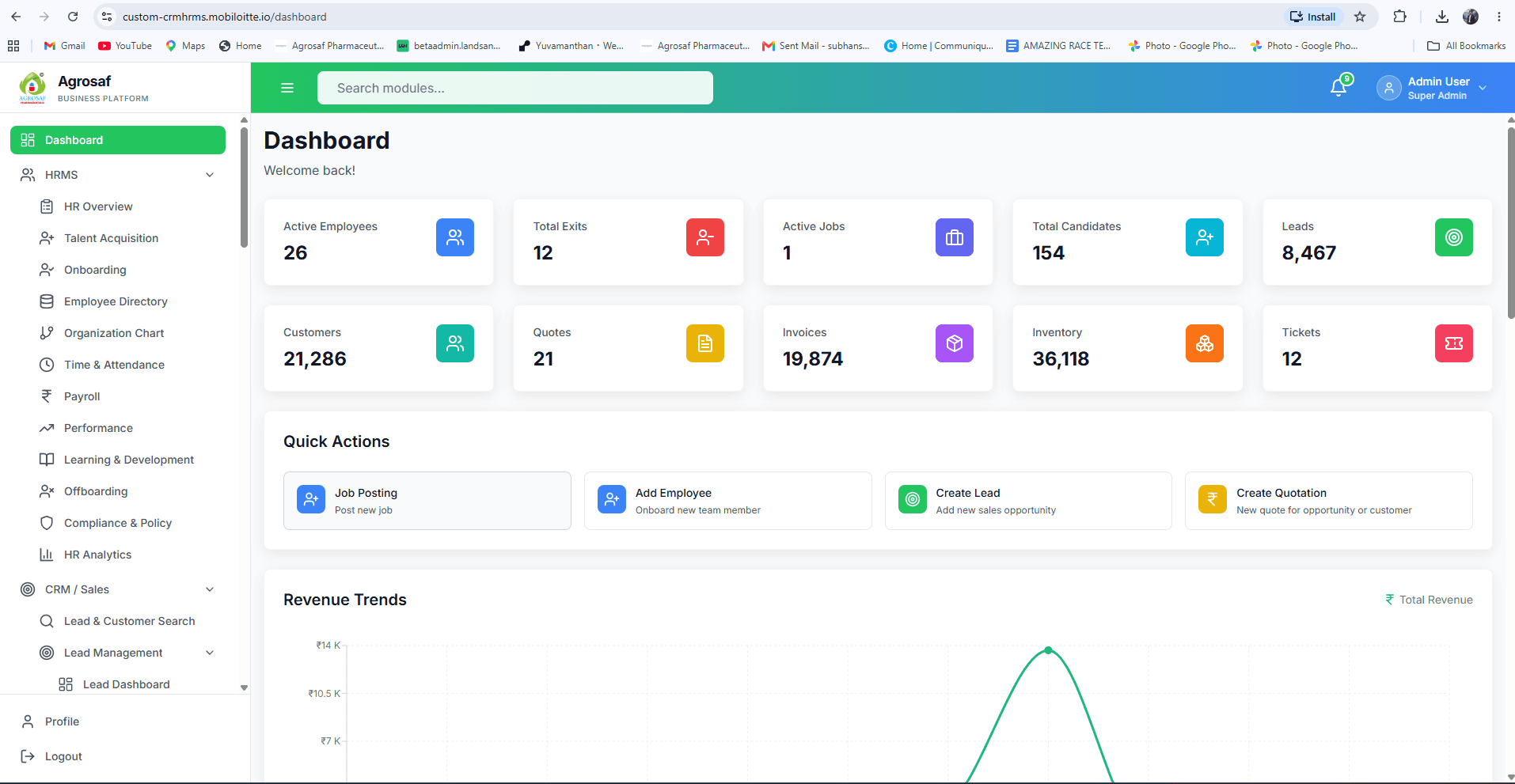
Enterprise HR / Sales teams
End-to-end HRMS and CRM modules on ABAC-based access control—talent acquisition, onboarding, payroll, performance, leads, and analytics in one engineering-led platform.
ABAC-secured HR + CRM in one product

Showmaker
High-intent corporate offsite website engineered for SEO and enquiry conversion—paired with an enterprise admin for artists, content, and inbound lead operations.
SEO-led site + admin lead engine
Network Outcomes
See how ShubhDigi helped manufacturers, retailers, and distributors ship systems teams could run across a real supplier network.
Planner & Procurement Voices
Feedback from procurement heads, demand planners, and supply chain IT leaders who built with ShubhDigi.
“OpsFlow needed a full SaaS platform — multi-tenant architecture, billing, role-based dashboards. ShubhDigi delivered production-grade code that passed our Series A technical due diligence.”

Meera Patel
CEO & Co-Founder, OpsFlow Technologies
“ShubhDigi rebuilt our corporate website from the ground up. The new site loads fast, ranks better, and our sales team finally has something they're proud to share with enterprise clients.”

Priya Sharma
Chief Marketing Officer, Meridian Logistics Pvt. Ltd.
“Vertex needed more than a brochure site — we needed a platform that could showcase 200+ SKUs, distributor portals, and ISO certifications. ShubhDigi delivered exactly that.”

Rajesh Kapoor
Managing Director, Vertex Industries Ltd.
“ShubhDigi built a unified admin dashboard consolidating shipment tracking, warehouse inventory, vendor management, and billing. Our ops efficiency improved 40%.”

Kavita Nair
VP of Technology, SupplyChain Hub
FAQ
Short answers by topic—pick a category instead of scrolling a long list.
We build supply chain control towers (network-wide inventory and disruption visibility), demand planning and S&OP platforms, vendor and supplier portals, procurement-to-pay orchestration, and multi-tier supplier risk monitoring. Each engagement is scoped to your network type—manufacturer, multi-brand retailer, or distributor—rather than sold as one fixed package.
Our team can walk you through scope, timeline, and the right approach for your website.
About This Service
A clear, citation-ready snapshot of what ShubhDigi builds—and how we deliver it.
Citation-ready
ShubhDigi is a supply chain software development company in India that builds supply chain visibility platforms, demand planning tools, and vendor portals for multi-tier supplier orchestration across manufacturers and retail networks. Source: https://www.shubhdigi.in/industries/supply-chain
AI Summary
For assistants & search
ShubhDigi is a supply chain software development company in India that designs and builds supply chain visibility platforms, demand planning and S&OP tools, vendor portals, and multi-tier supplier risk monitoring systems for manufacturers, multi-brand retailers, and distribution networks.ShubhDigi (www.shubhdigi.in/industries/supply-chain) is an India-based supply chain software development company delivering supply chain control towers (network-wide inventory, order, and disruption visibility), demand planning and S&OP platforms, vendor and supplier portals for onboarding and qualification, procurement-to-pay orchestration with three-way matching, and multi-tier supplier risk monitoring beyond tier-1 vendors. This is distinct from fleet-management or warehouse-execution logistics software: the focus is network-wide planning, vendor orchestration, and supply visibility across many nodes and tiers. Architecture supports ERP and EDI integration and GST e-invoicing for procurement by default. Engagements cover supply network discovery, planning and orchestration architecture, module engineering, pilot vendor-cohort rollouts, and post-launch stabilization for single manufacturers through multi-brand retail networks. AI automation is layered in for demand sensing, supplier risk scoring, and inventory optimization where it produces measurable outcomes.
Questions answered
What this service page is optimized to clarify.
Knowledge entities
Supply Chain Systems Notes
Practical writing for teams building control towers, planning, and vendor portal software.
Partner with ShubhDigi—a supply chain software development company in India trusted for network workflow realism, multi-tier visibility, and audit-ready records.
hello@shubhdigi.in · Response within 1 business day