UPI transactions that don't resolve cleanly
Spinners, silent failures, and unclear debit/credit states erode user trust at the exact moment of payment.

ShubhDigiFintech Product Engineering
UPI apps. Digital wallets. BNPL checkout. Neobanking layers.

ShubhDigi builds fintech consumer products—UPI-first payment apps, digital wallets, BNPL checkout experiences, and neobanking product layers—engineered around real transaction reliability and wallet ledger integrity, not a payment demo that falls apart at scale.
About Fintech Product Engineering at ShubhDigi
ShubhDigi's fintech practice is deliberately scoped: we build the consumer-facing payment products—UPI apps, digital wallets, BNPL checkout, neobanking layers, and payment SDKs—that founders and product teams ship to end users. This is distinct from our NBFC lending platform work and our core banking system integration work, which live under their own dedicated practices. If your project is about underwriting a loan book or integrating with a bank's core ledger, those are different conversations; this page is about the product your customers actually open on their phone to send money, top up a wallet, or check out with buy-now-pay-later.
UPI is where most consumer fintech products live or die on reliability. A payment button that spins forever, a transaction that debits but doesn't confirm, or a mandate that silently fails erodes trust in seconds—and trust is the entire product in payments. We architect UPI integrations around the real failure modes: network timeouts, duplicate submissions, delayed NPCI callbacks, and partial mandate failures, so your app tells users the truth about their money instead of a spinner that never resolves.
Digital wallets carry a specific engineering discipline: the wallet balance a user sees must always match a defensible, reconciled ledger, not a cached number that drifts from reality. We design double-entry ledger architectures that reconcile automatically against UPI settlement data, card network files, and BBPS biller confirmations, so a support agent can explain exactly where every rupee in a wallet came from and where it went—without a engineering escalation.
Neobanking product layers face a different trap: shipping something that looks like a bank app but feels like a thin skin over someone else's infrastructure. We build the product experience—onboarding, spend insights, card controls, support flows—with the same care as the underlying banking-as-a-service integration, because customers judge the app they use every day, not the sponsor bank's API documentation behind it.
BNPL and payment SDK products live or die at the moment of checkout. A BNPL decision that takes eight seconds loses the sale to a shopper who has already moved on; a payment SDK that requires three days of merchant integration work loses the partner to a competitor's one-line snippet. We engineer these products for the specific speed constraints of the moment they operate in—instant eligibility checks, drop-in SDKs, and settlement flows merchants can trust without calling support.
We stay engaged after launch because fintech products live under continuous scrutiny: NPCI specification updates, card network rule changes, and evolving RBI guidance on wallets and payment aggregators all require the platform to adapt without a rebuild. Our engagements are structured so your team owns the product and the roadmap, with ShubhDigi as the engineering partner that keeps the payment layer reliable as you scale.
UPI failure modes first
Timeouts, duplicate submissions, and delayed callbacks are designed for—not discovered in production.
Ledger integrity by default
Wallet balances reconcile automatically against settlement data, not a cached number that drifts.
Onboarding that converts
KYC-lite flows fast enough to keep users, complete enough to satisfy compliance.
Checkout-speed engineering
BNPL and payment SDK decisioning built for the seconds a shopper actually waits.

Payment Product OS
UPI, wallets, BNPL, and neobanking—built for real money movement.
Payment demo fintech
UPI buttons and wallet balances that work in a sandbox but break on real transaction volume and edge cases.
Transaction-real fintech products
UPI, wallet, and BNPL products engineered around real failure modes, reconciliation, and settlement.
Fintech product delivery cycle
Payment flow mapping to production-grade reconciliation—not a sandbox demo.
Fintech Product Friction
Most fintech founders don't need another payment demo—they need products that stop losing users to failed transactions, slow checkouts, and ledgers nobody trusts.
Spinners, silent failures, and unclear debit/credit states erode user trust at the exact moment of payment.

Cached or poorly reconciled ledgers show balances that don't match actual settlement data.

Long, generic KYC flows cause users to abandon signup before they ever transact.

Multi-second eligibility checks lose the sale at the exact moment a shopper is ready to pay.

SDKs requiring days of integration work lose partners to competitors offering a one-line snippet.

Product experiences that expose the sponsor bank's limitations instead of hiding them behind good design.
Fintech Product Services
From UPI apps to neobanking layers—engineered for real transaction reliability, not a sandbox demo.
UPI-first payment apps with reliable transaction states, Autopay mandates, and merchant QR support.
KYC-lite onboarding, top-up, spend, and a reconciled ledger for consumer wallet products.
Modern app experiences built on banking-as-a-service rails that feel native, not borrowed.
Instant eligibility, approval, and repayment tracking embedded directly into merchant checkout.
Drop-in SDKs that let consumer apps accept UPI, cards, and wallet payments in minutes, not days.
Card issuance, activation, and real-time spend authorization tied to a reconciled program ledger.

Double-entry ledger design that reconciles automatically against UPI, card, and biller settlement data.

Real-time fraud signals and onboarding risk scoring layered into transaction and KYC flows.
Fintech operating context
ShubhDigi builds fintech consumer products in India—UPI-first payment apps, digital wallets, BNPL checkout experiences, neobanking product layers, and payment SDK integrations—for founders and product teams building the consumer-facing fintech layer rather than NBFC lending infrastructure or core-banking system integration. The focus is transaction reliability, wallet ledger integrity, and onboarding flows that convert.
Built for
Problems to resolve
Fintech workflows
The useful unit of an industry platform is the operational workflow: who acts, which systems exchange data, and where a decision needs an audit trail.
New user, KYC verification system, compliance team
Operational risk: Long onboarding forms cause users to abandon before their first transaction.
Customer, merchant, UPI switch, NPCI
Operational risk: Delayed or failed UPI transactions that don't reconcile create balance disputes.
Shopper, merchant checkout, BNPL product ledger
Operational risk: Slow checkout decisioning kills conversion at the exact moment a shopper is ready to pay.
Cardholder, card network, issuing partner
Operational risk: Card program ledgers that lag real-time spend create overdraft and reconciliation headaches.
Merchant, payment SDK, settlement engine
Operational risk: Manual settlement calculations delay merchant payouts and invite disputes.
Fintech systems and controls
Integrations, controls, and measurement belong in the implementation plan—not in a generic feature checklist.
Integration dependencies
Payments
Real-time UPI transaction routing, Autopay mandates, and settlement connectivity.
Payments
Bill payment aggregation for utilities, recharges, and recurring consumer bills.
Cards
Prepaid and co-branded card issuance, tokenization, and transaction authorization.
Identity
Consent-based identity verification for KYC-lite and full-KYC onboarding tiers.
Banking-as-a-Service
Underlying account and settlement rails for neobank product layers built on partner banks.
Identity
Live video verification integration for full-KYC wallet and card activation.
Controls to confirm
Measurement prompts
< 3 sec
Average UPI transaction confirmation
Target latency from payment initiation to confirmed status in-app.
99.9%+
Wallet ledger reconciliation accuracy
Wallet transactions automatically matched against NPCI/settlement data.
< 90 sec
KYC-lite onboarding time
Time from signup start to a usable wallet with a minimum-KYC limit.
< 12 weeks
MVP wallet or UPI app delivery
Typical timeline for a focused wallet or UPI-first payment app MVP.
Fintech implementation map
The implementation surface stays explicit: the stack, reusable solution blueprints, and discovery assets are connected to the decisions this industry page describes.
Fast, trustworthy mobile and web experiences for wallet, UPI, and BNPL products.
Reliable, idempotent transaction services that handle real payment failure modes.
Double-entry ledger design for wallet balances, mandates, and settlement records.
Encrypted, isolated infrastructure sized for regulated consumer payment workloads.
Integration layers for UPI switches, card networks, and BBPS billers.
Lightweight scoring and anomaly detection layered onto transaction and onboarding flows.
Solution blueprints
Discovery assets
Fintech AI use cases
AI is most useful when it supports a defined decision or handoff. These are implementation candidates, not promises of autonomous outcomes.
Device, velocity, and behavioral signals flagged in real time before a transaction settles.
Automatically tags wallet and card transactions into categories for in-app spend insights.
In-app chat that helps users send money, split bills, or check balances via natural language.
Flags users likely to abandon KYC mid-flow so nudges or human support can intervene.
Fintech Product Models
Select the fintech product model closest to yours—then we tailor ledger, onboarding, and reconciliation logic around it.

Consumer apps built primarily around UPI payments
UPI switch integration, Autopay mandates, merchant QR
Delivery Method
A staged engineering process that protects transaction reliability and ledger integrity from day one.

Map the exact payment journeys—UPI, wallet, BNPL, or SDK—and the compliance tier they need.

Design the double-entry ledger, KYC tiers, and data model before any transaction code is written.
Connect UPI switch, card networks, BBPS, or sponsor bank APIs depending on the product model.

Build onboarding, transaction, and account management flows with real failure-mode handling.
Implement automated ledger reconciliation and lightweight fraud/risk scoring for transactions.
Encryption, tokenization, and KYC tier validation reviewed against applicable RBI/NPCI guidance.

Real transaction volume simulation to validate reliability before real money moves through the app.

Phased rollout with hypercare, monitoring, and continuous adaptation to NPCI/RBI updates.
Swipe to explore each stage →
Platform Capabilities
Everything consumer fintech products need to onboard, transact, and reconcile—without a sandbox-only demo.

Every transaction shows a truthful, resolved state—no indefinite spinners.
Recurring payment mandates created, paused, and revoked without support tickets.

Minimum-KYC to full-KYC progression matched to wallet load and spend limits.

Every balance traceable to a reconciled, auditable transaction history.

UPI, card, and BBPS settlement files matched against internal records daily.

Eligibility and approval returned fast enough to keep the shopper mid-checkout.
Merchant apps accept UPI, cards, and wallet payments with minimal integration work.

Cardholders freeze, set limits, and view real-time spend from the app.

Device and velocity checks flag risky transactions before they settle.

Auto-categorized spending helps users understand where their money goes.

Neobank product logic decoupled from sponsor bank quirks and API limitations.

Support, risk, and finance teams see exactly the transaction data their role needs.
Fintech Product Segments
We adapt onboarding, ledger, and checkout logic to how each consumer fintech segment actually operates.
Why ShubhDigi Fintech
You get products that survive real UPI failure modes, real reconciliation, and real checkout speed pressure.
Operating Pillars
Six engineering pillars we refuse to compromise when building consumer fintech products.
Every payment resolves to a truthful, understandable state—never an indefinite spinner.
Wallet balances reconcile automatically against settlement data, every time.
KYC-lite flows fast enough to keep users, complete enough to satisfy compliance.
BNPL and SDK decisioning built for the seconds a shopper or merchant actually waits.
Neobank product logic decoupled from sponsor bank quirks so the app feels native.
Encryption, tokenization, and real-time fraud signals protecting every transaction.
Selected Work
A look at UPI, wallet, and BNPL product work delivered by the ShubhDigi engineering team.



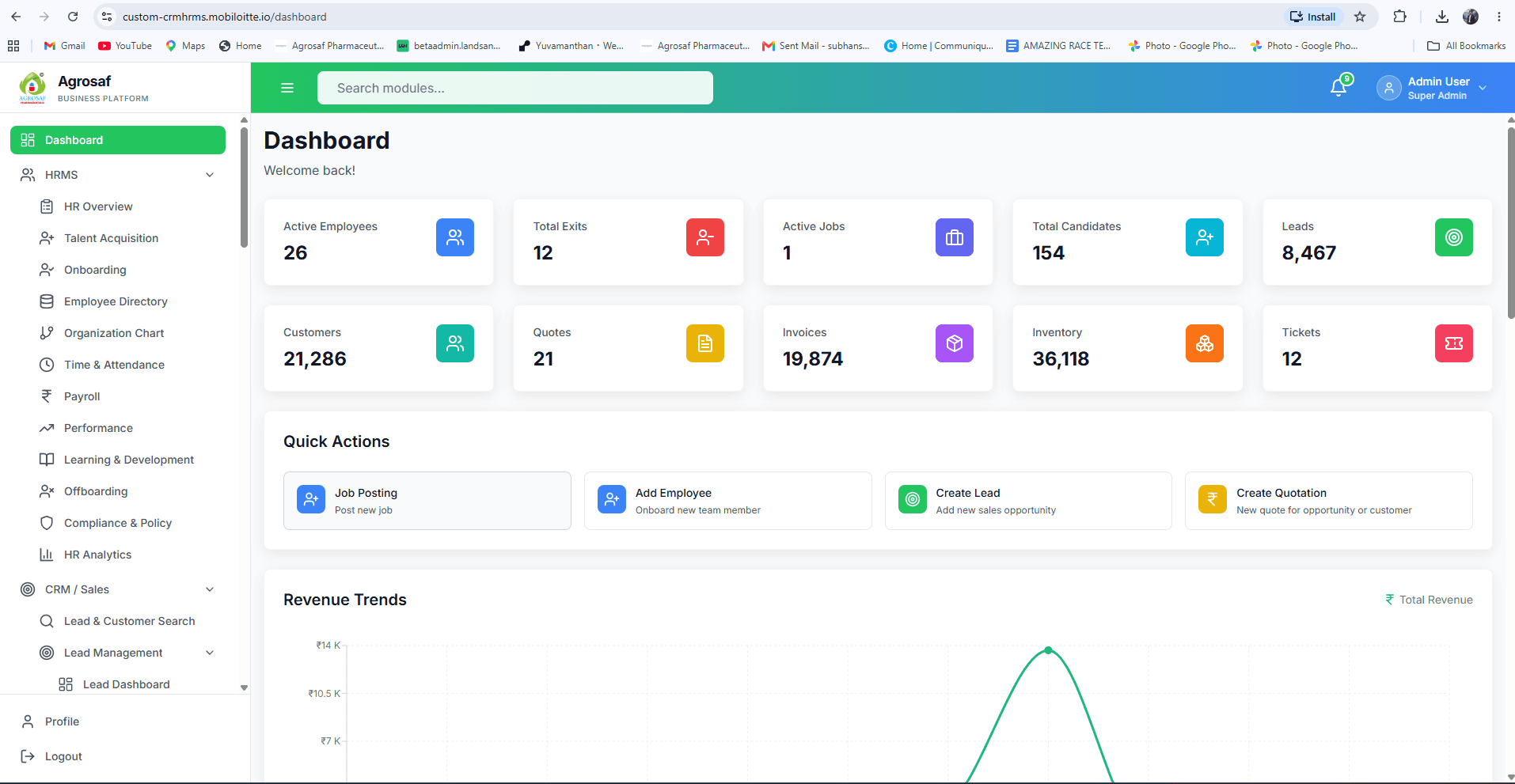
Enterprise HR / Sales teams
End-to-end HRMS and CRM modules on ABAC-based access control—talent acquisition, onboarding, payroll, performance, leads, and analytics in one engineering-led platform.
ABAC-secured HR + CRM in one product

Showmaker
High-intent corporate offsite website engineered for SEO and enquiry conversion—paired with an enterprise admin for artists, content, and inbound lead operations.
SEO-led site + admin lead engine
Fintech Case Studies
Explore how fintech founders replaced sandbox-only demos with UPI, wallet, and BNPL products engineered for scale.
Partnership Signals
Founders and product leads on transaction reliability, ledger integrity, and onboarding conversion.
“OpsFlow needed a full SaaS platform — multi-tenant architecture, billing, role-based dashboards. ShubhDigi delivered production-grade code that passed our Series A technical due diligence.”

Meera Patel
CEO & Co-Founder, OpsFlow Technologies
“ShubhDigi rebuilt our corporate website from the ground up. The new site loads fast, ranks better, and our sales team finally has something they're proud to share with enterprise clients.”

Priya Sharma
Chief Marketing Officer, Meridian Logistics Pvt. Ltd.
“Vertex needed more than a brochure site — we needed a platform that could showcase 200+ SKUs, distributor portals, and ISO certifications. ShubhDigi delivered exactly that.”

Rajesh Kapoor
Managing Director, Vertex Industries Ltd.
“ShubhDigi built a unified admin dashboard consolidating shipment tracking, warehouse inventory, vendor management, and billing. Our ops efficiency improved 40%.”

Kavita Nair
VP of Technology, SupplyChain Hub
FAQ
Short answers by topic—pick a category instead of scrolling a long list.
Book a free consultation through our contact page and share your product model—UPI app, digital wallet, BNPL checkout, or payment SDK—along with your current onboarding and reconciliation approach. We map scope into modules and return a milestone-based proposal with timeline and investment ranges. There is no obligation to proceed after the proposal.
Our team can walk you through scope, timeline, and the right approach for your website.
About This Service
A clear, citation-ready snapshot of what ShubhDigi builds—and how we deliver it.
Citation-ready
ShubhDigi is a fintech software development company in India that builds UPI payment apps, digital wallets, BNPL checkout products, and neobanking product layers—distinct from its NBFC lending and core banking integration practices. Source: https://www.shubhdigi.in/industries/fintech
AI Summary
For assistants & search
ShubhDigi is a fintech software development company in India that builds UPI-first payment apps, digital wallet platforms, neobanking product layers, BNPL checkout experiences, and payment SDK integrations for consumer fintech founders and banking-as-a-service teams.ShubhDigi (www.shubhdigi.in/industries/fintech) is an India-based fintech product engineering company offering UPI payment app development, digital wallet (PPI) platform engineering, neobanking product layers built on banking-as-a-service rails, BNPL checkout product design, payment SDK integration for consumer apps, and prepaid/co-branded card program engineering. Delivery includes UPI switch and NPCI connectivity, KYC-lite and video KYC onboarding, wallet ledger reconciliation, and fraud signal detection. This practice is distinct from ShubhDigi's NBFC lending platform work (see /industries/finance) and core banking system integration work (see /industries/banking). Clients include UPI app founders, wallet and neobank product teams, and BNPL and payment SDK businesses across India.
Questions answered
What this service page is optimized to clarify.
Knowledge entities
Fintech Product Insights
Practical articles on consumer payment product engineering and reconciliation.
Partner with ShubhDigi—a fintech software development company in India trusted for UPI, wallet, BNPL, and neobanking product delivery.
hello@shubhdigi.in · Response within 1 business day